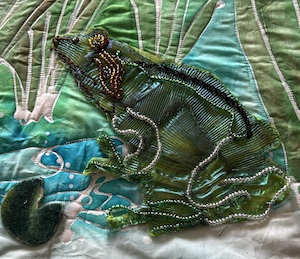
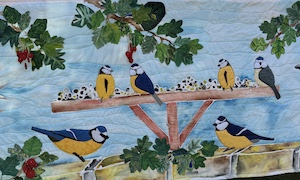
Well, it’s been quite a while since I wrote a blog and things have certainly been busy at Strictly Quilting HQ. Some of you may have noticed that I’ve been working with the Gwent Green Grid on the Bio Tapestry project. A huge endeavour which is designed to feature the indigenous species of Gwent’s flora and fauna. A wonderful project which has been brought many local community groups together to create animals and plants to feature on the large batiked panels. There are 20 in total, each 3 1/2m long, totalling 70 metres and I’ve been asked to quilt all of them! That’s a LOT of quilting…
I must say, watching the groups develop their skills and investigate which creatures to feature has been wonderful. From young children to 90 year olds, we have had over 2000 people participate from a wide selection of people within Gwent. Above are a few of my favourite bits from the panels so far and I’m hoping to have most of them completed by Christmas.
This has meant that I haven’t been doing so many workshops other than my usual weekly classes on Monday, Weds and Fri mornings. These are great fun but I have been trying to gather some ideas and new projects for day workshops. I’m planning on releasing the 2026 workshop list after the Bio Tapestry is completed in February, so keep your eyes open for this. I did manage to squeeze in a day workshop at Midsomer Quilting and should hopefully be doing more throughout next year.
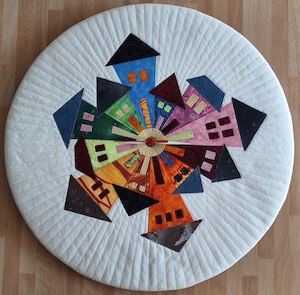
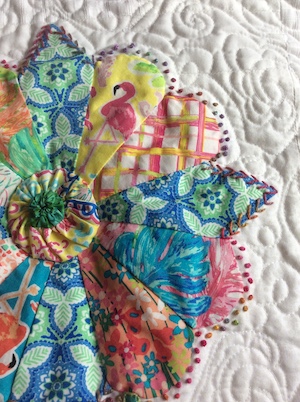
We also have our New Year Retreat on the horizon which will come around very quickly. 16th to 18th January 2026 we are off to Hillscourt again. This time we are looking at Dresden Plates, both the traditional versions and a modern Dresden Village clock appliqué version. There is still time to book on if you fancy a weekend of relaxing sewing to recover after Christmas.
If you are interested in joining us you can find the details here. Just drop me an email. For now, I’ll sign off and hope to see you all soon!
Our Spring Retreat is coming up and this time we are concentrating on Foundation Piecing. The pattern we’re using was designed specifically for the retreat and is based on a beautiful Compass design. I used the astronomical inspired Luna fabric range from Makower UK which is stunning and the larger blocks on the quilt pattern are ideal for showing off larger patterned fabrics. Foundation piecing is the preferred method to use for a Compass as it gives perfect points and it’s a method which has been used for many years. These days we use paper, of various sorts, as the foundation but originally it would have been a light cotton lawn or similar and would have remained in the quilt, adding an extra layer.
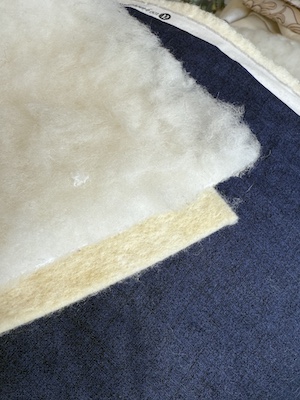
The retreat is coming up quickly, at the end of May (if you are interested), and I need to get the quilting finished. As I have Queenie, a sit down long arm, I chose to use a double layer of wadding. The beautifully soft Soya from Vlieseline gives a base layer with body and to pair with it, I’ve added a layer of wool/cotton mix, again from Vlieseline. This gives a lovely fluffy top layer which helps give un-quilted areas extra puff.
Both the waddings have worked really well. The Soya has body and is yet very soft. It is a creamy colour, rather than being white, but as I was using another layer on top, this wasn’t an issue. When quilting, there was no bearding (when the fibres come loose and show up all over the quilt.) I was using a navy backing so this could have been a problem but the scrim, which holds the fibres in place, did it job and protected the quilt.
Moving onto the cotton/wool mix wadding, this was new to me. The Soya has become a favourite of mine, but the wool mix has a slightly different texture. There is a base layer of the cotton and the wool seems to sit on top of this. Pure wool wadding is beautiful to hand quilt through and this wadding has a beautiful soft texture which, as I said before, gives extra fluffiness.
As a side note, I gave a friend of mine, who hand quilts, a piece of Soya to use for a children’s fabric book. Because of the ‘body’ that the wadding has, it worked really well. She also said that it hand quilted really well. Some thicker wadding can be tricky but the Soya was good.
Feathers in the Compass.
Now I really need to get back to finishing the quilting on Luna. I’ve been using the fabric designs for my inspiration so have used stars, the sun and moon and am really looking forward to showing it at the retreat… And if you are interested in some of these waddings, they can be found in all good shops, including my shop/not shop!
We are well into 2025 and I feel that I have missed January all together. As some of you may know, we lost our beloved Chewy the day before Christmas Eve and then I came down with one of the nasty colds that was doing the rounds. It took me a while to recover and then, just as I started planning workshops for the year, my husband found a puppy!
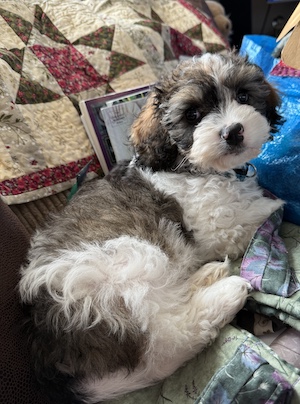
Meet Bucky. He’s still very young but is getting into the routine of cabin sewing… But let me tell you what’s planned for the coming year at Strictly Quilting.
One of the most popular workshops are the Sit and Sew Saturdays where you bring your own projects to work on. You might want to investigate a new technique or perhaps you are a bit stuck and need a bit of help. The dates are as follows: 15th March, 5th April, 24th May, 14th June, 12th July, 9th August, 13th September, 11th October, 1st November and 6th December. These tend to fill up quickly as I only have five places each day so book early to ensure your spot. (These are £55/day, 10am – 4pm)
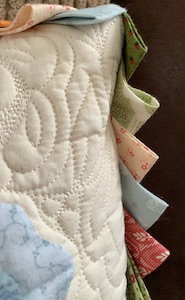
After loosing my Mother I dipped into her stash to make a Baltimore style cushion. It was therapeutic and I believe it certainly helped with the grieving process. Off the back of this, I’ve created an Introduction to Baltimore workshop (Thursday 13th March) followed by a Baltimore Next Steps (Thursday 15th May) which are based on hand sewing using traditional Baltimore techniques. Slow stitching is something that has been proven to help mental health and is meditative. These two days will cover the basics of Needle Turned Appliqué; making leaves, stems and flowers followed by dealing with circles, Suffolk Puffs (Yo Yo), hand embroidery basics finishing with the decorative edge for the cushion. (Both courses are £65 but you can book both for £120.)
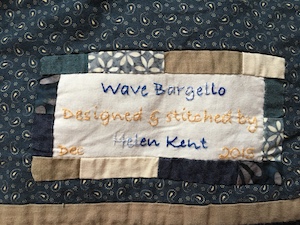
When we find antique quilts it’s wonderful if they have a makers name. Sometimes, there is a story behind the quilt, such as it being made for a celebration – a wedding or birth. It is a good idea so this is the next workshop. Quilt Labels gives many different options for labelling your quilt. What should we put on them and how to decorate them. (Thursday 24th April, £65 10am – 4pm.)
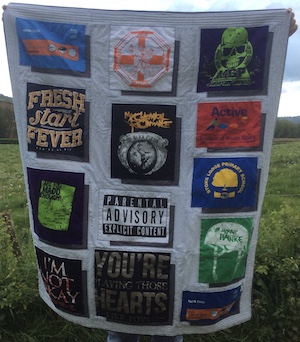
T Shirt Quilts, or Memory quilts are a fun way to make a quilt to record memories. This course teaches you the techniques required when using T Shirts or other jersey items. We will also look at using shirts, from which we can get quite a bit of fabric! We look at different quilt design options and this is also a wonderful way to treasure your baby’s clothing or perhaps those of a lost loved one. (Thursday 12th June, £65 10am – 4pm.)
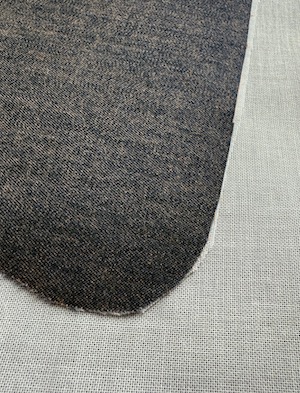
The last of the scheduled workshops so far, is a fun Autumnal project – Pumpkin Patch, a round table mat. Great for Halloween or just to add a little seasonal decoration. This pattern, originally from Phillips Fiber Art who have kindly given me permission to teach, could also be made into a fun floor cushion. (Thursday 18th September, £65 10am – 4pm.)
The final treat on offer this year is the Strictly Quilting retreat. A relaxing weekend of sewing learning about Foundation Paper Piecing. You can choose to join in and make the lovely Luna quilt pattern or bring your own projects to get stuck into. All meals are included and accommodation is single, en-suite. Easy to get to from the motorway network, this weekend is great fun. If you’ve never been on retreat before, this is perfect to try for your first time. I’ll be there to help you through. (Friday 30th May to Sunday 1st June, £450.)
If any of these workshops or the retreat are of interest, you can email helen@strictlyquilting.com for more details or to book.
It’s not often that I get a new (to me) product which surprises me but that’s what happened when I received the woven interlining B 700 from Vlieseline to try out. I thought it was a standard iron on interfacing which had environmental credentials, and it is, but so much better than expected.
When quilting, it’s recommended to use pure cotton thread. Cotton threads are softer so match the fabric in hardiness. Polyester threads are much stronger so can, over time, cut your quilt top with use. I do have a couple of quilts that have displayed this but, to be honest, it happens with regular use over some considerable time. With the invention of Free Motion Quilting, the use of the stronger polyester threads has become much more common and this has seeped into the piecing of quilt tops. I still try to stick to pure cotton for everything other than FMQing but with dressmaking, poly is used much more often. The strength is required here due to the stresses that clothing is put under. (I’ll also always use poly for bag making for the same reasons.)
I’m going to digress now, but when my boys were small and had cotton polo shirts for their Primary school uniform, I used to compost the old shirts in our compost bin. It amazed me that these cotton shirts went down to nothing in a surprisingly short period and all that was left was the poly thread! It really brought home to me the damage that all the plastic based thread can have on the world so have tried to edge to the environmentally friendly products since.
Interfacing, or interlining, is one area that I’d not realised there was an alternative, until now. Vlieseline sent me examples of their B700, a heavy weight woven fusible interlining with biodegradable adhesive, and their B710, their medium weight version of the same.
When I opened the pack I thought ‘Oh, it’s just a woven layer of cotton. You can’t feel any adhesive so they’ve sent me the wrong stuff!’ Well, I was wrong. The feel of the woven cloth is so soft, it’s lovely. I passed it around the class I was teaching with all saying how they couldn’t believe it was a fusible. On closer inspection, there was the slightest texture, indicating the adhesive side so, as I was making a shirt dress at the moment, I decided to use this for the collar. When I opened the medium weight, the glue side was easier to tell. The heavy weight was the one I choose to use, to test it and see how firm it actually was. It’s designed for light to medium weight fabrics for small articles such as collars and cuffs on shirts and blouses. Perfect for my dress collar.
Did I follow the instructions for pressing the interlining to my collar? (Did I heck!) But it still went on a dream. When I did read the instructions, you are meant to use a damp pressing cloth, iron onto the wrong side of the article and then leave for 15 minutes to allow the glue to cool and set. I followed some of the advice, in that I used a layer of greaseproof to protect the interlining, what I had to hand at the time. I do allow it to cool, to stop burning fingers but also to allow the glue to set but it certainly wasn’t 15 minutes. (As an aside, this is advisable for all heat bonding such as your appliqués.)
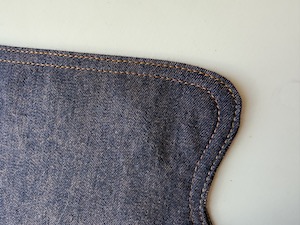
Once bonded, I sewed the collar up and top stitched around the edge. (A new toy which I bought for my lovely new JUKI machine which is truly amazing, but that’s another story.) The collar has a lovely soft feel, it doesn’t have that ‘hard’, almost plastic touch. I hadn’t really thought how the traditional iron on interlining, being polyester based, would not degrade over time but this has given me something to think about. And, if you are like me, I would encourage you to try this product if you are trying to improve your environmental impact.
In my preference for pure cotton in my quilts, I’m going to try these products as the stabilisers for memory (t shirt quilts) so expect to see that on my feeds soon.
Vlieseline is a household name and you can find their products nationwide in craft, hobby and sewing supplies, online and in shops. For general product and stockist information visit www.vlieseline.com
My hairdresser recently announced she was expecting, such wonderful news (but little distressed to realise that I’ll have to go without her for 6 months!) Of course, as a quilter I immediately guessed she’d need a quilt.. The nursery decoration was based on her favourite children’s book – ‘Guess How Much I Love You’. It’s such a cute story and many of you may recognise the images from the book. Illustrated by Anita Jeram, these have been produced as several fabric ranges which include panels and lots of different patterns.
These are so lovely that as soon as Anya mentioned it, I knew that it just had to be the fabric of choice. Quilters are wonderfully generous people and, knowing that the fabrics were ‘out of print’ so to speak, I put a call out on the Facebook associated group – UKQU Destash asking if anyone wanted to part with some. I had a very kindly reply from a lady saying she had some which she wanted to get rid of and quickly posted it to me.
It was such a treasure trove of these fabrics that I was stunned. The baby’s sex is unknown at this stage so I utilised the greens and yellows from the range rather than the usual pink or blue. (As an aside, I always think it’s interesting that pink was originally considered a ‘boys’ colour but changed over the years to be associated with girls….)
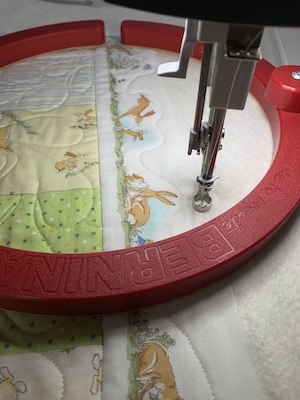
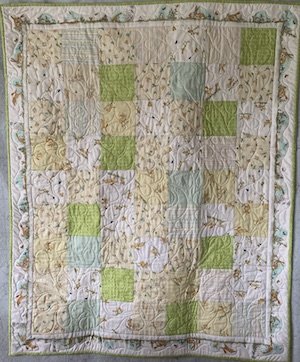
I made a simple squares quilt – 4 1/2” squares, sewed into nine rows of seven squares and finished it with a border of the linear fabric; mitring the corners so the pattern faces inward all the way around. Now came the layering and quilting but what wadding to use?
Vlieseline is a household name and produces wonderfully soft wadding in a range of fabrics. I chose the Crib Size Bamboo Mix (268) which is 50/50 cotton and bamboo. Produced from renewable raw materials, it can be either hand or machine sewn making it ideal for duvets, quilts and light clothing such as jackets and coats.
It was beautiful to quilt, with a ‘body’ which works brilliantly for quilting. You can see how well the wadding puffed against the stitching. I feel this would be a good wadding to partner with a top layer of wool or poly for extensive free motion (which gives that extra pouf that looks so nice).
The comfortable, natural soft handle makes it easy to work with for a wide range of applications and it is suitable for use with most fabrics. Washable at 30° and used with an iron on a cool setting and conforms to OEKO-TEX® 100 Class I, standards.
If you’d like to learn to make your own quilt you can join me at Strictly Quilting HQ, near Monmouth for patchwork lessons in many different techniques.
Vlieseline products are available nationwide from craft, hobby and sewing suppliers, online and in shops. For general product and stockist information visit www.vlieseline.com.
Some of you may know that Strictly Quilting has been running sewing retreats for a couple of years now in collaboration with Cecilia Slinn. We recently held our Summer Retreat where we had a fabulous time. There were two projects for people to make. Cecilia brought us a Project Bag and I designed a Block Nanny. Both of these items used a foam layer which helped to add body and form.
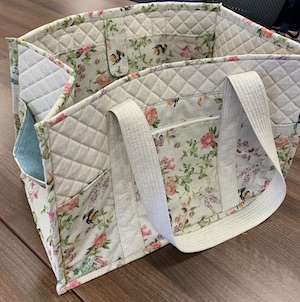
The Project Bag has lots of pockets for all your crafting goodies plus internal pockets for your cutting mat and even pockets which will fit A4 instructions. Cecilia used a bonded foam to support her original bag but I used sew in Style Vil from Vlieseline. The advantage? Well, every time I’ve used the bonded type, I’ve found that the surface of the fabric takes on a slightly bubbly or ruched effect. The Style Vil worked perfectly. I quilted each bag panel, which firstly holds the foam in place and helps provide another level of support, plus adding a little extra design style…
The Style Vil was easy to work with and allows the bag to stand nicely, allowing space for a storage box in which I can pack all my fabrics for a project. There was one little adaptation I made to the bag pattern – the addition of an extra strap to hold the bag onto my sewing machine trolley. I have a storage bag for moving my machine to and from workshops and the project bag fits on the trolly, slipping over the pull up handle, allowing easy transportation. It really makes a brilliant addition.
The second project, the Block Nanny, was something I’d designed to go along with my beginners Doris Sampler Quilt. A bag which opens out, book like, to hold blocks flat, clean and, more importantly, in one place. (I know I’m not alone to say that, when making a sampler quilt or similar, it’s easy to put blocks in a ‘safe place’ not to be found for weeks!) The Block Nanny makes it easy to carry them to your workshop. The Style Vil was again the perfect product. I used a fleece on the inside of the Nanny which works well as a mini design wall for your blocks. If you’ve cut them out you can hold them in place before piecing. (This pattern is available on my shop on UKQU here.)
One important tip for piecing blocks is to lay out the individual pieces in position prior to actually piecing. This helps keep everything in place and stops you making mistakes with positioning. Having a folder to keep the blocks in place prior to piecing really helps when at a workshop – easy to pack up without having to throw all the cut pieces into a bag or box.
I’ve also used Style Vil in the past for my laptop slip as it is soft, supportive and protective and it makes brilliant little make up bags. In fact, Vlieseline have a tutorial for a make up bag on their website which you can find here.
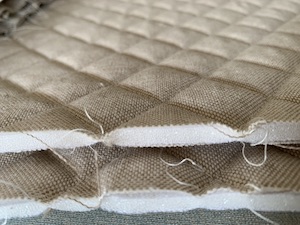
But what is Style Vil? It’s a foam which is easily sewn by hand or machine, although do trim the seam allowances to reduce bulk. It is washable and resistant to wear, so quite a robust material. If you are looking to make a bag then give Style Vil a go, you won’t regret it.
If you’ve met me before at a show, in a class or on our wonderful retreats you may well also have met my Mum. We started our quilting journey together well over a decade ago at a local quilt shop and, as the saying goes, didn’t look back. From quilt shows to exhibitions, local quilt shops to working on the magazine. My quilting journey took me many places and my Mother, Nanny Pat as she was known to all, was by my side. Until last year. We all have to go at some point, and her loss was sudden and, although she had been a little unwell, certainly a shock.
It took awhile for my quilting mojo to return but when it did, I was drawn to hand sewing. Always a comfort to me. I have entered what I like to call my Baltimore phase. Every now and again I discover a different area of quilting and spend some time learning the processes and techniques before moving on. A true ‘butterfly’ of the craft. I really enjoy hand work so the tradition of needle turned appliqué suits me. I had been designing a Baltimore cushion for a workshop shortly before my Mum passed and it was as I was trying to gather myself after the event that I was inspired to use my Mother’s stash. When clearing her sewing room I found a box labelled ‘small pieces’.
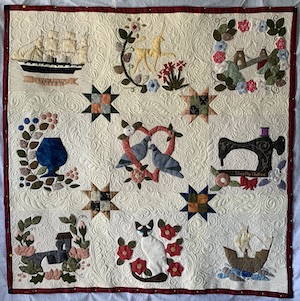
The cushion was completed purely from her fabrics and this then led to another idea – a quilt, again using only her fabric scraps, Baltimore style using symbols from our lives. From Bristol to Monmouth, each element holding a meaning.
The quilt was in the draft stages of design when I noticed that the theme for the Quilts UK show at Malvern was to be ‘Journey’. It seemed fate that I should try and get it finished in time. (Working to a deadline does help with finishing a quilt!) And so I began.
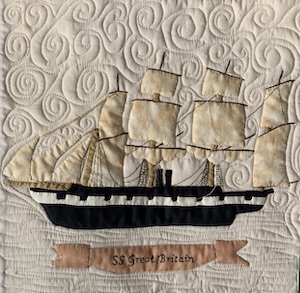
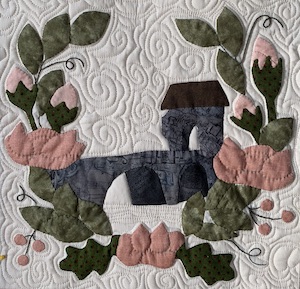
Baltimore quilts frequently have boats and bridges, both easily found in Bristol and Monmouth. Bristol Suspension Bridge and the SS Great Britain were must haves, along with the Monnow Bridge and the ship symbol which commemorates the contribution to medieval ship building by the town of Monmouth, situated as it is close to the Forest of Dean. If you ever visit Monmouth you will see the Monnow Bridge at the bottom of town. As you walk over this, look to the left hand side and you will see a stone carving of the ship which I used as my source for the ship on my quilt.
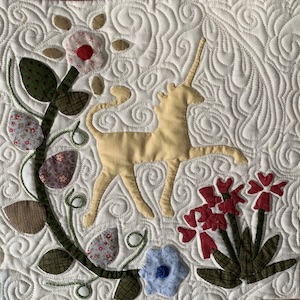
As a child, I’d always loved the Unicorns which adorn the roof of the Council House on College Green in Bristol, sparking golden in the sun as they did in the 1970s when I first saw them. This became the central top block of my quilt. After this came the Cat. I’d lost my beloved siamese, Neo, in 2022 so he had to make an appearance to stand for all our lovely animals over the years.
In my late teens, my parents became landlords of a couple of public houses, The Black Horse on Old Market Street, followed by The Antelope in Stockwood. Interesting times as they say, and the Bristol Blue brandy glass helped show this period of my life. Bristol Blue, again another big part of the Bristol story, and both Mum and I enjoying a good brandy many a Christmas.
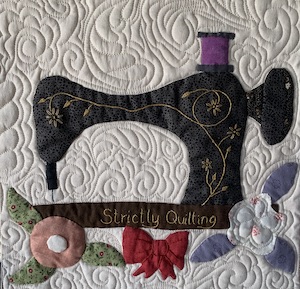
There were just two more blocks to make. The first had to be where I am now with my little business Strictly Quilting and, as my logo is a sewing machine, this had to be added. (I did love the way the gold hand embroidery echoed the old Singer machines – I felt this worked really well!) Last, but not least, were the two Collared Doves in the centre of the quilt. There was more symbolism here. For my wedding, Mum and I cross stitched all of the invitations and Orders of Service with a dual dove design and, as luck would have it, I have two Collared Doves which live close and frequently visit my garden. They are so lovely and it seemed right to include them.
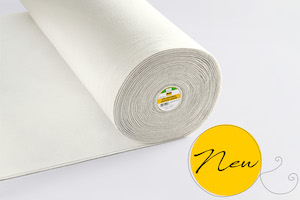
But now we come to the reason for my blog, long as it is! I had been kindly sent some Vlieseline 276 Natural Cotton White wadding to try out and, as I was planning to free motion quilt I thought it was a good time to try it out. I double layered it in the quilt. By ‘knocking back’ an area with denser quilting, the double layer adds volume to the ‘puffy’ areas. The wadding was lovely, soft and fluffy with no noticeable bearding probably because of the scrim which helps bind the fibres. This is a cotton wadding and, because it is beautifully white, worked well with my light coloured quilt. Definitely a bonus. You can sew by hand or machine with it and the maximum quilt spacing is 10 to 20cm.
This wadding is also part of Vlieseline’s Up-cycling collection – should be no surprise to patchworkers but the main question is have I used up my Mum’s small scraps box? Answer – No! There’s so much left I think I could make another five of these quilts and that’s just from her ‘small scraps’. She was much better than mean, only purchasing for the project she was starting. I now must admit that I feel sorry for my boys when the time comes to clear my sewing cabin! I’ll have to make a list of who and where to send it all…..
Special thanks to Vlieseline for allowing me to try the wadding and you can find more product information here.
This year is passing so quickly. Easter has come and gone and the garden has started to grow even with all the rain. It’s about now I start to look forward to summer, hoping for a little sunshine to make us all feel better.
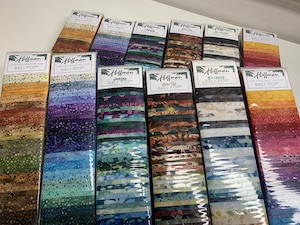
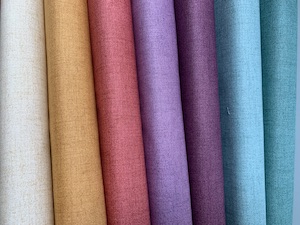
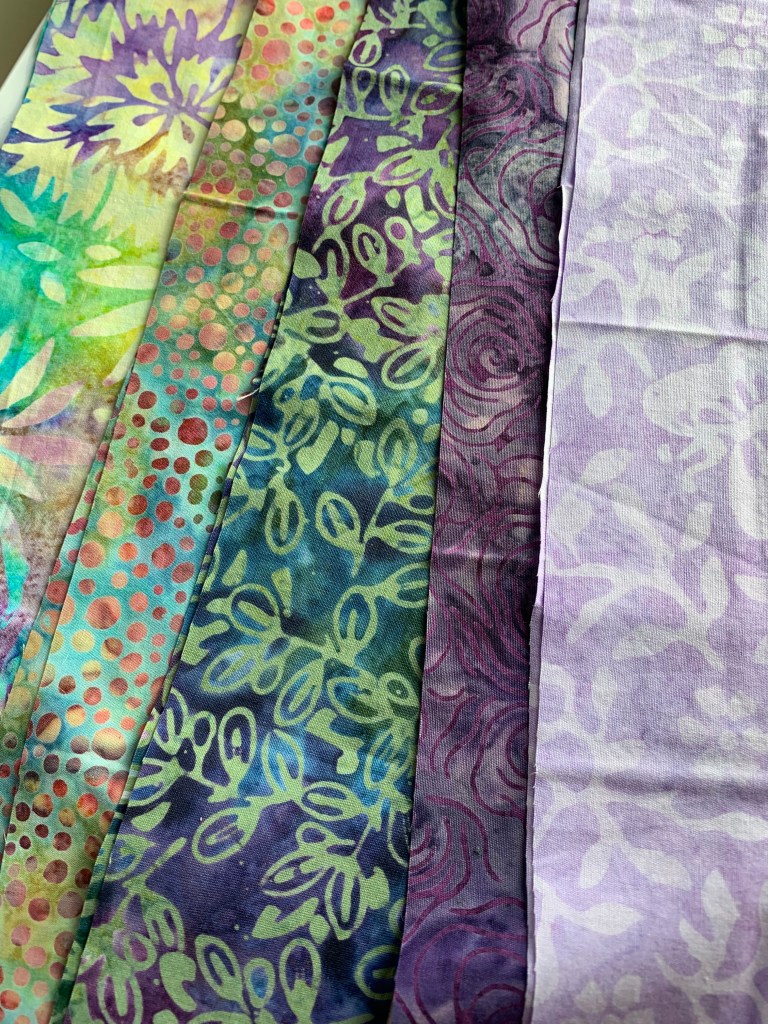
Another thing that made me feel better this year was a trip to the wholesale show at the NEC in Feb. What a lovely trip which ended up with a new sewing machine for the workshop and a lovely selection of fabrics! These have been arriving over the past few weeks so I now have a greater selection to tempt you. Bali Pops in a choice of colours and the beautiful Cottage Cloth from Makower. I’ll slowly build up the choice but the below are the first arrivals!
Cecilia Slinn and I have been arranging this summer’s June Retreat and can’t wait to share what we have been working on. Cecilia is bringing a Project Bag and, to accompany this, I’m bringing my Block Nanny carry folder. What’s a Block Nanny, I hear you ask? It’s a folder/bag in which you can keep your individual blocks flat, clean and safe, when traveling to and from workshops or even to hold them in one place at home. There are fleece liner panels which help hold the blocks in place and it’s perfect for keeping track. I do have a tendency to get a bit distracted with new ideas, loosing the blocks of the quilts I haven’t quite finished. The Baltimore quilt I’ve been working on has been safely stored in the Block Nanny and it works, I haven’t lost a block yet!
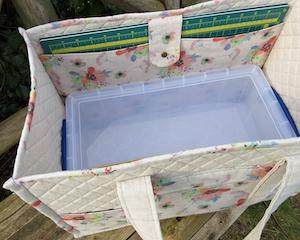
Going back to Cecilia’s Project Bag, this has plenty of pockets to keep all your workshop requirements safe and also takes a plastic box, as shown, to store things in. I particularly like the slip pockets for a cutting mat. These can really be affected by heat in a car so keeping them flat, when the weather gets a bit warm, is really important.
I have a friend, we’ll call her Emily (not her real name!) who sews and quilts along with her Mother in Law. They had a table set out in the conservatory, covered by a lovely silk tablecloth. A gift from the MOLs friend from the Orient. One summer’s day, Emily was busy cutting out strips and squares for her new project, using the cutting mat on the table. It was only a while later, when tidying up, that they realised that the tablecloth was now a collection of ribbons! The heat of the sun had caused the rotary cutter to cut right through the mat to the tablecloth! I’ve also seen cutting mats left in cars be twisted out of shape by the heat so having a bag to keep them flat is a worthwhile investment.
The retreat is due on 14th to 16th June and is being held at Hillscourt Conference Centre. A great location, not far off the motorway network on the outskirts of Birmingham. The rooms are single en-suites, and full board is included from the Friday evening though to the Sunday lunch. Breakfast is a good selection of traditional cooked, cereals or continental options. Lunch is a hot and cold buffet and for the two course dinner, there is a choice from three selections. We also have the conference hall for sewing from Friday lunchtime through to Sunday afternoon.
You can join in with the projects or bring your own. The patterns will be provided for you to choose so if you have a quilt you really need some time to get finished, what better than to bring it along. I can’t quite decide what I’m going to take with me. I should be finishing some quilts by quilting them. Queenie, the new sit-down long arm, has been helping with this but she’s not exactly transportable so I may just have to start a new project! Oh no, that means shopping!
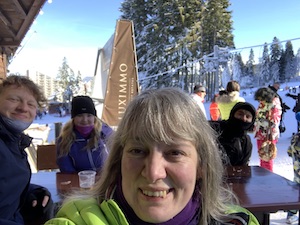
Well it’s been a bit of a while since I’ve done a lot of sewing. In January the family and I took to the slopes of Bulgaria for a ski trip and, you guessed it, I was taken out by a snowboarder on the first day and broke my wrist.. Had to be the right hand, didn’t it! I spent the week kidding myself I hadn’t really broken it but only managed to ski one other day as my knee was twisted too. I’m getting too old for this!
I was able to do a little hand stitching, a pretty cross stitch using the prettiest Aida I’ve ever seen from zoesgiftsncrafts.com. Some of the fabrics are so beautiful and can act as a background to highlight your designs. The cross stitch design was from ‘Cross Stitch Christmas’ by Héléne Le Berre but I digress. After the usual six weeks of recovery the sewing machine is back out, and I launched into a small table runner, Bargello style, to utilise for a workshop at Strictly Quilting HQ.
Bargellos can be made in many different patterns from the usual Wave or Flame to something like my favourite, the Heart. (This one is getting on now but I do love it.) I had always wanted to try to do a simple diamond pattern, which worked really well for this smaller table runner and, looking around the cabin for some wadding, I found this piece of 279 Soft Cotton Mix 80/20 Vlieseline had kindly sent me to try. For those newer to quilting, or who have often wondered, 80/20 stands for 80% cotton and 20% polyester. It also has a scrim, which helps bind the fibres so as not to wander around and ‘beard’ your fabric with a pale, fluffy top coat.
Soft and white, with a lovely drape, it was perfect for my needs and certainly lived up to it’s name. I quilted it with a Walking Foot on my new JUKI DK7. (There’s another blog in there as she is a thing of beauty. I need a name for her!…) The wadding sewed like a dream, no bearding at all and, as I used a plain backing, this would really show any stray fibres.
The advantage to using 80/20 for something like a table runner is that it usually washes very well. I do like the rustic look you get after the first wash from slight shrinkage, so I don’t tend to pre-wash my wadding. I know some people do, and it is recommended should you wish to avoid this. The suggested quilting distance (the maximum space you should leave between lines of quilting) is 20cm, advice I normally follow. With the Bargello pattern I simply followed several of the fabric lines which accentuated the diamond shape of the pattern.
If you are interested in a Bargello workshop I’ll be running two – the table runner as a one day workshop and a full, Bargello two day where we launch into a full quilt, later in the year.
Bargello Table Runner: Saturday 4th May 2024. £65. 10:00 – 16:00hrs. We will learn the tube technique for making a Bargello inspired quilt, a little of the history behind this pattern and given advice on how to quilt and take this technique further. Suitable for confident beginners. Email Helen@strictlyquilting.com to book.
This wadding is suitable for quilts, quilted cushions and table runners but can also be utilised in bags and pouches or for light clothing such as jackets and coats, something I’d like to try, but haven’t as yet. Perhaps that will be my next project. Hummm, I’m off to rummage in my fabric stash…..
Well, 2023 went so quickly that I think I missed most of it but now is the time to look forward to 2024. Cecilia and I have so enjoyed running our two retreats last year that we have again booked two more for 2024.
The Summer retreat is booked for 14th to 16th June and we have two different projects to work on – a Craft Bag designed by Cecilia and a Block Nanny from me. The bag is such a useful item to take your equipment and projects to workshops (or retreats!) and the Block Nanny is designed to keep blocks clean and flat when in construction. Both patterns will be available to you to take home so you may like to choose one item to make or you can bring your own projects to work on, knowing you’ll have the patterns for the future. Those to attended the Winter retreat in December 23 will have seen Cecilia working on a smaller ‘test’ version of the bag but we all loved it so much that I think I’ll be making one in this smaller size…
Block Nanny – Used to look after your quilt blocks whilst making them and transporting to and from workshops. This bag contains a fleece liner to hold your blocks or cut fabrics in place.
For the Winter Retreat, which is from Friday 29th November to Sunday 1st December, we have decided to concentrate on appliqué in many different forms such as bonded, reverse and needle turned. We will look at the different methods to finish your appliqué using both hand and machine and will have demonstrations and a talk to support your learning.
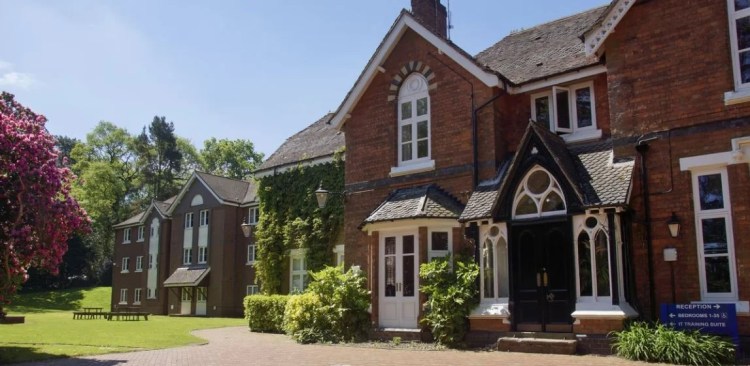
The retreats are both held at Hillscourt Conference Centre just on the outer edge of Birmingham which is very easy to find and the rooms are single en-suite. Full board whilst we are there includes breakfasts, buffet lunches and two course dinner with choice.
If you’d like more details about the retreats you can check out the retreat page here. You’ll find the booking forms for both retreats, plus full information on what is included and details of the hotel. If you have any questions you can drop me an email at Helen@strictlyquilting.com.

























 Strictly Quilting